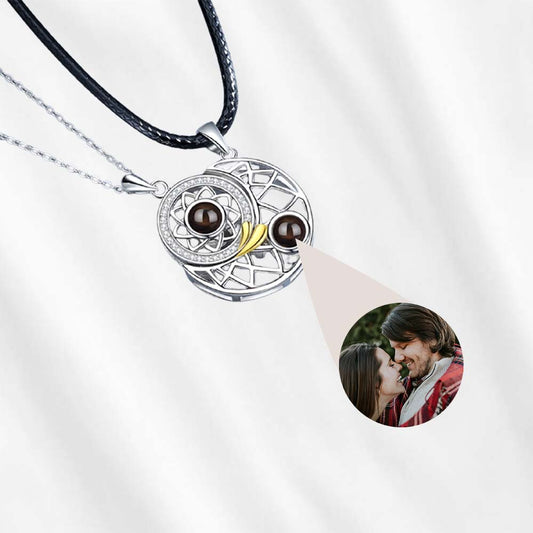
Auspicious Cloud White Jade Endless Luck Ring
When you give someone a piece of jewelry, you usually want it to say something words cannot quite capture. Rings made of gold or silver often mark clear milestones like engagements or anniversaries. But jade carries a different kind of quiet intention. Giving a white jade ring often feels less like an announcement and more like a gentle wish for someone's daily peace, safety, and good fortune.
White jade has held a special place in personal adornment for thousands of years. While emerald-green jadeite often gets the spotlight at high-end auctions, creamy white jade—traditionally valued as nephrite—was historically revered for its smooth texture, soft glow, and symbolic association with pure character and inner calm. Today, people often choose a white jade band or setting when they want to give a gift that feels personal, grounded, and deeply protective.
What Gives White Jade Its Deep Meaning as a Gift?
In many Eastern cultures, there is an old saying that gold has a measurable value, but jade is invaluable. That sentiment comes from how jade has been treated throughout history. Rather than being viewed merely as an expensive rock, it was treated as a reflection of human virtue. Scholars and thinkers compared its smooth exterior to kindness, its firm density to wisdom, and its quiet, unflashy glow to humility.
When you present someone with a white jade ring designed with auspicious clouds, you are participating in that long tradition. People rarely buy jade on a whim just to match a party outfit. Most often, a piece is chosen during life transitions: a daughter heading off to college, a friend starting a new business, a partner going through a stressful period, or a family member celebrating a birthday. The stone acts like a tangible wish for balance and steady footing.
There is also an intimate, physical element to wearing jade that other gemstones do not share. Diamonds and sapphires sit high in prongs, sparkling in the light. Jade, on the other hand, sits close to the skin. It absorbs body heat quickly. Over months and years of wear, the stone develops a subtle, soft sheen from the natural oils of the wearer's hands. Many people feel that a jade ring becomes part of their routine, serving as a soothing touchstone during long workdays or quiet moments of reflection.
According to geological resources like the Britannica guide to jade minerals, jade actually refers to two distinct minerals: nephrite and jadeite. White nephrite, often called "mutton fat jade" when it has a warm, translucent, oily white finish, has been carved for more than five millennia. That longevity adds emotional weight to any gift. It tells the recipient that your connection to them is built to withstand time and pressure without losing its warmth.
The Meaning Behind the Auspicious Cloud Motif
Patterns in traditional jewelry are never just decorative filler; they tell a story. One of the most recognizable and enduring patterns across Asian art is the cloud motif, often referred to as xiangyun, or auspicious clouds. When you see curling, swirling cloud lines framing a central gemstone or carved directly into the metal band, you are looking at a symbol of harmony, rising luck, and protection.
Historically, clouds were seen as messengers between heaven and earth. In agricultural societies, clouds brought the rain necessary for crops to flourish, making them a natural symbol of life, abundance, and relief from hardship. Over time, that practical reliance turned into a broader artistic symbol. Clouds came to represent high aspirations, smooth journeys, and a life that unfolds without needless struggle.
In jewelry design, the cloud pattern often takes the form of gentle scrolls or continuous, interlocking curves. The continuous nature of the scroll carries its own message: good luck that does not cut off abruptly, but rather flows smoothly from one day into the next. When paired with white jade, the pairing feels harmonious. The cloud sits in the sky; the white jade looks almost like condensed mist. Together, they create a piece that feels light and calm on the finger rather than heavy or ostentatious.
If you are giving this ring to someone who has been working hard toward a goal, the symbolism is especially fitting. It says, "May your path open up before you, and may your efforts bring easy, natural success." It does not scream for attention, but anyone who looks closely at the ring will notice the careful curves and the peaceful color of the stone.
How a Jade Ring Compares to Common Gemstone Rings
Most people are used to rings set with faceted stones like quartz, cubic zirconia, or glass. Choosing a mineral stone like jade means stepping into a completely different sensory experience. Understanding how jade behaves can help you decide whether it fits your daily lifestyle or the lifestyle of the person you are buying for.
The first noticeable difference is how light interacts with the stone. Faceted stones bounce light off sharp, geometric cuts to produce sparkle. Jade is cut into cabochons, smooth beads, or rounded bands. It does not sparkle; it glows. When sunlight passes through white jade, the light diffuses softly through the interlocking mineral fibers. The result is a milky, warm translucency that feels calm rather than flashy.

The second major difference is toughness. Gemstone toughness is different from hardness. As noted in mineral guides by the Gemological Institute of America, nephrite jade has an exceptionally dense, interlocking fibrous structure. This structure makes nephrite remarkably resistant to chipping or shattering upon impact. While a diamond can chip if struck at a weak cleavage plane, nephrite jade absorbs shock well. That makes a jade ring practical for daily tasks, typing, and everyday movement.
Here is how a white jade ring compares with other common white and light-colored ring stones:
| Stone Type | Visual Effect | Everyday Feel | Common Meaning |
|---|---|---|---|
| White Jade (Nephrite) | Oily, soft, translucent glow | Smooth, warms to body heat quickly | Calm, protection, pure intent, luck |
| White Opal | Rainbow flashes, milky body | Delicate, requires moisture caution | Creativity, hope, emotional shifting |
| Moonstone | Blue or silver billowy shimmer | Moderate durability, soft surface | Intuition, feminine energy, new beginnings |
| White Sapphire | Bright, glass-like sparkle | Very hard, cool to the touch | Clarity, focus, traditional prestige |
This comparison makes it easy to see why someone looking for an emotional, everyday gift often lands on jade. It does not demand constant babysitting like an opal, yet it feels softer and more personal than a sharp white sapphire.
Styling and Wearing a White Jade Ring Daily
Because white jade has a neutral, milky appearance, it is surprisingly versatile to wear. You do not need a closet full of traditional garments or monochrome outfits to make it work. In fact, a jade ring looks best when it is treated as a simple everyday piece rather than an item saved only for formal dinners.
If you wear mostly silver or cool-toned metals, the pale, creamy color of white jade blends right in. It sits quietly next to simple silver bands, tennis bracelets, or plain watches without creating visual clash. If you prefer gold or brass tones, white jade provides a clean contrast that softens the metallic shine, making yellow tones look warmer and more understated.
Many wearers like to put a ring like this on their index or middle finger. In modern styling, wearing a ring on the index finger often feels confident and forward-facing, while the middle finger gives a centered, balanced look. Because cloud-detailed settings usually have gentle curves rather than sharp corners, they rarely catch on sweater knits, pockets, or bags during regular errands.
For workplace settings, a ring of this style is ideal. Big, glittering stones can sometimes feel out of place in casual offices, medical settings, or classroom environments. White jade looks composed and dignified. It catches just enough eye to invite a curious compliment without drawing unwanted attention.
Practical Care and Long-Term Maintenance
Taking care of a jade ring does not require expensive equipment or complicated chemical dips. In fact, simple habits are the safest way to keep both the stone and its setting in great condition for years.
The most important rule for jade care is to keep it away from harsh domestic chemicals. When cleaning the house, washing dishes with heavy grease-stripping soaps, or swimming in chlorinated pools, it is best to take the ring off. Strong acids and alkalis can slowly etch the microscopic surface of nephrite, turning that silky, oily luster into a dull, matte surface over time.
When the ring looks a little smudged from hand lotion or daily use, clean it using these straightforward steps:
- Fill a small bowl with lukewarm water and add two or three drops of mild dish soap.
- Soak the ring for three to five minutes to loosen any dust caught around the cloud curves or under the stone.
- Use an extra-soft toothbrush to gently clean around the edges of the setting. Do not scrub hard; light circular motions are plenty.
- Rinse the ring thoroughly under lukewarm running water. Always place a drain cover or small strainer in the sink first.
- Dry the ring completely with a soft, lint-free microfiber cloth.
If you store the ring when it is not on your hand, keep it in a soft fabric pouch or a lined jewelry box. While nephrite is very tough, keeping it separated from harder stones like diamonds prevents accidental surface scratches on both the jade and the surrounding metalwork.
A gift of jewelry should never feel like a burden to maintain. With occasional gentle rinses and mindful daily wear, a white jade ring retains its quiet presence, serving as a steady companion on the hand and a constant reminder of the person who gave it.